
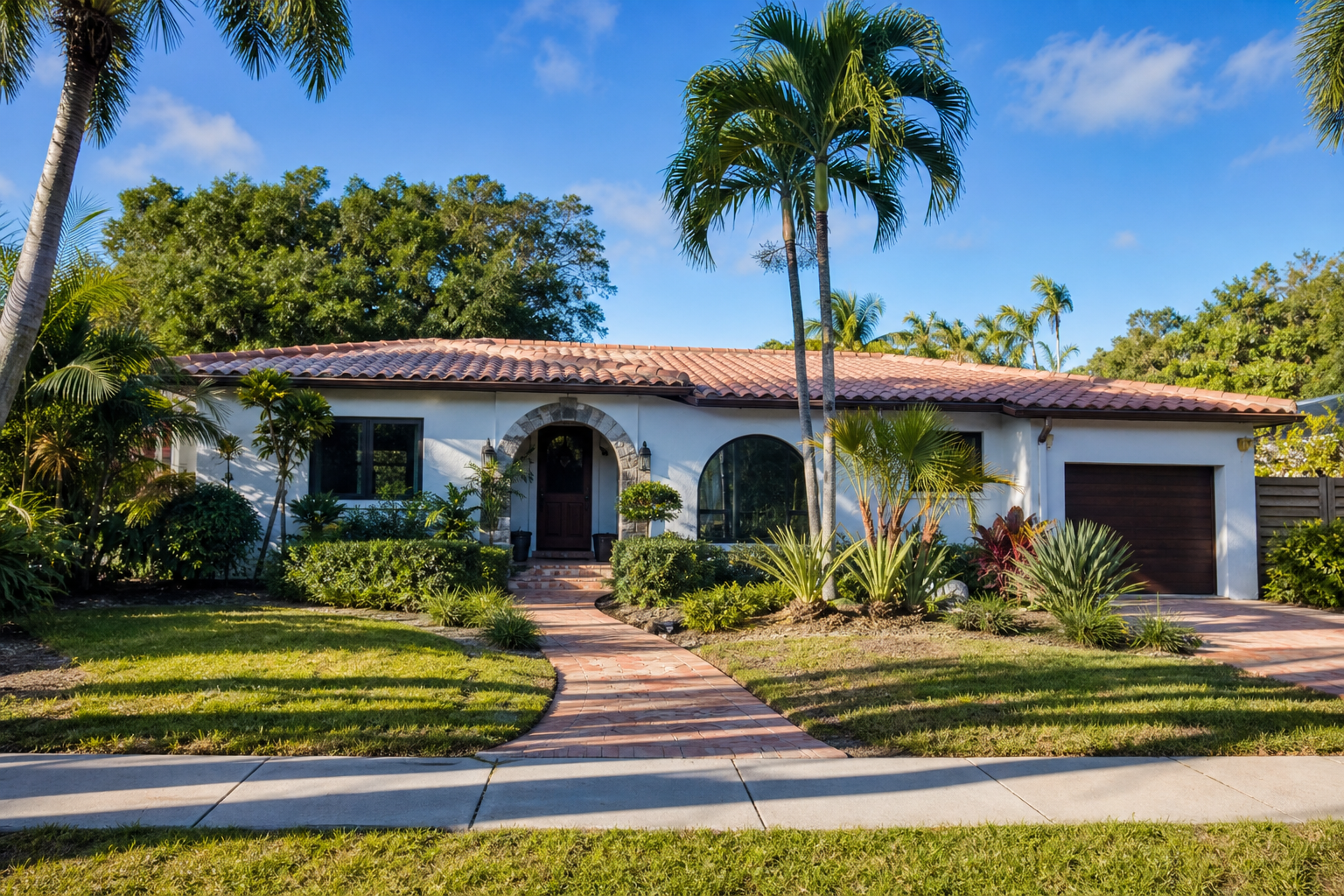
You can sell a Fort Lauderdale home with foundation issues, but Florida law requires you to disclose known structural defects, and the condition will affect pricing, buyer financing, and negotiation. Your three realistic paths are repair and document, price to reflect the defect, or sell as-is with a thorough disclosure package.
Can you sell a house with foundation issues in Greater Fort Lauderdale?
Yes, you can sell a Fort Lauderdale home with known foundation problems, but Florida law requires you to disclose what you know, and the condition will shape your pricing strategy, your buyer pool, and how far negotiations go. The good news: a clear disclosure strategy paired with honest pricing almost always produces a better outcome than trying to minimize the issue and losing deals mid-contract.
Foundation concerns in Greater Fort Lauderdale carry a particular weight. Older Broward County homes sit on soil that has been drained, filled, and regraded over decades. Settlement, moisture intrusion, drainage issues, and flood history can all overlap in ways that make a structural question feel bigger to buyers and their lenders than it might in a drier climate. That context matters when you are deciding how to position your home.
Recent Zillow market data for the Wilton Manors area shows a median sale price of $565,000, with homes averaging 44 days on market and 161 active listings currently competing for buyers. That is not a market where you can afford to lose a deal at inspection because a known issue was not addressed upfront.
What Florida Law Requires You to Disclose
Florida’s seller disclosure obligation is rooted in the landmark case Johnson v. Davis, which established that sellers must disclose known facts materially affecting value that are not readily observable and not known to the buyer. The Florida Bar Journal describes this as a “known latent defect” standard, meaning Florida is not a universal fill-out-every-form state, but it is not a pure caveat-emptor state either. If you know about a foundation problem, you are expected to disclose it.
The Nolo guide to Florida seller disclosures reinforces this: a buyer’s home inspection does not eliminate your duty to disclose what you already know. Prior repair work, visible cracking you are aware of, differential settlement, and any underpinning or stabilization work you have had done are all facts that belong in your disclosure package.
The National Association of REALTORS® identifies structural defects, including foundation issues, as among the most important categories of information sellers must reveal when those defects could affect value or safety.
The Florida Seller Flood Disclosure
For any residential contract executed on or after October 1, 2024, Florida now requires a separate Seller Flood Disclosure by statute. Under Florida HB 1055, you must disclose in writing whether the property has experienced flood damage, whether any flood damage claim was filed with an insurer, whether any federal flood-assistance claim was filed, and whether you are aware of facts materially affecting the property’s flood risk.
This matters for foundation cases because water intrusion, drainage problems, and flood history can all contribute to soil movement and structural concerns in Broward County homes. The flood disclosure and the broader Seller’s Property Disclosure are separate documents, but they can tell a connected story about your property’s condition. Both need to be accurate.
If your home was built before 1978, add the federal lead-based-paint disclosure to the package as well. Under EPA rules, sellers of pre-1978 housing must provide the EPA lead pamphlet, disclose known hazards, share available records, and give buyers a 10-day inspection period unless waived in writing.
Your Disclosure Package at a Glance
| Document | When Required | What It Covers |
|---|---|---|
| Seller’s Property Disclosure | All residential sales (known latent defects) | Structural issues, foundation condition, prior repairs |
| Florida Seller Flood Disclosure | Contracts on or after Oct. 1, 2024 | Flood damage history, insurance claims, known flood risk |
| Federal Lead-Based Paint Disclosure | Homes built before 1978 | Known lead hazards, available records, buyer inspection period |
I walk every seller through this package before we list. Getting it right at the start prevents a deal from falling apart three weeks into contract when the buyer’s lender flags the inspection report.
Your Three Paths to Market
Once you understand your disclosure obligations, the strategic question is which of three approaches gives you the best outcome. There is no universal right answer. It depends on the severity of the issue, your timeline, your equity position, and the current buyer pool in your neighborhood.
Path 1: Repair, Document, and List at Full Value
If the foundation issue is repairable and the repair cost is proportionate to your equity, completing the work before listing is often the strongest play. A documented, permitted repair with an engineer’s sign-off removes the issue from negotiation entirely. Buyers and their lenders see a resolved problem, not an open question.
The key word is documented. Keep every invoice, permit, engineer’s report, and warranty. In South Florida, where buyers are already navigating flood insurance, 4-point inspections, and wind mitigation reports, a well-documented repair signals that a seller has taken the property seriously. That perception has real value at the negotiating table.
If you are weighing a roof replacement alongside this decision, the same principle applies. I wrote about the repair-vs.-list tradeoff in more detail in Should I Replace My Roof Before Selling My Fort Lauderdale Home?, and much of that framework translates directly to structural decisions.
Path 2: Price to Reflect the Defect
If repair is not feasible or not financially justified, pricing the home accurately from day one is the next best strategy. I believe in this approach strongly: pricing your home right from the start beats chasing the market down later. A foundation issue that is disclosed and priced in will attract buyers who understand the trade-off. The same issue that is hidden or underpriced will blow up in inspection, cost you a deal, and put you back on market with a stigmatized listing.
Pricing a problem property correctly requires a real market analysis, not an online estimate. Automated valuation tools do not account for structural condition, and they will overvalue a home with a known defect. In luxury and waterfront markets especially, real data protects your equity far better than an algorithm does.
Your specific number depends on the severity of the issue, repair estimates from licensed contractors, comparable sales of similar condition homes in your neighborhood, and current buyer demand. That is exactly the kind of analysis I run before we discuss a list price.
Path 3: Sell As-Is With Full Disclosure
An as-is sale does not mean hiding problems. It means you are selling in current condition without committing to repairs, while giving the buyer full information to make their decision. In Broward County, as-is contracts are common, but they do not relieve you of your disclosure obligations under Johnson v. Davis or the new Florida Seller Flood Disclosure requirement.
As-is sales with foundation issues tend to attract investors, cash buyers, and experienced renovators. That is a narrower pool than a turnkey listing, which is why pricing has to be calibrated carefully. The upside is a faster, cleaner transaction with fewer contingency risks. The downside is that you will likely net less than a repaired and fully-marketed home would bring.
For inherited properties or estates where the seller has limited knowledge of the home’s history, the as-is path with thorough disclosure is often the most defensible approach. I cover that scenario in more depth in Selling an Inherited Home in Fort Lauderdale: What Broward Heirs Need to Know Before Listing.
How Foundation Issues Affect Buyer Financing and Negotiation
This is where many sellers get surprised. A buyer may be willing to purchase a home with a known foundation issue, but their lender may not be willing to finance it. Conventional lenders, FHA, and VA all have property condition requirements, and an active structural defect can trigger a requirement for repairs before closing, a reduced appraisal, or an outright loan denial.
Cash buyers and investors sidestep this entirely, which is one reason they are often the most realistic buyers for a problem property. If you are marketing to financed buyers, expect that the inspection report will go to the lender’s underwriter, and be prepared for the possibility that the lender requires a structural engineer’s letter or completed repairs as a loan condition.
On the negotiation side, a foundation issue disclosed upfront gives you more control than one discovered at inspection. When a buyer finds a problem you did not disclose, they have leverage and an emotional reaction working against you. When the issue is in the listing and priced in, negotiation is calmer and more predictable.
Post-inspection repair credit requests are common in South Florida regardless of property condition. For a foundation issue, buyers will typically request either a price reduction or a repair credit. Which is better for you depends on your closing cost structure, your loan payoff, and how the numbers work out. I walk my clients through those scenarios before we ever receive an offer, so there are no surprises when the inspection report comes back.
A Broward County closing runs through a title company, the deed is recorded with the Broward County Records, Taxes and Treasury Division, and Florida documentary stamp tax applies to the deed at the statutory rate of $0.70 per $100 of consideration per the Florida Department of Revenue. The title company coordinates paperwork and funds disbursement, but recording itself goes through the county.
If you want to understand how all of the closing-cost categories affect what you actually walk away with, How Much Will You Net Selling Your Home in Fort Lauderdale? walks through the full picture. Every situation is different, and the only way to know your real number is to run it with someone who knows this market.
Frequently Asked Questions
Do I have to disclose foundation cracks when selling a house in Fort Lauderdale?
Yes, if you are aware of foundation cracks or structural movement, Florida law requires you to disclose it. Under the Johnson v. Davis standard, sellers must disclose known facts that materially affect value, are not readily observable, and are not known to the buyer. A known foundation defect fits that definition, and failing to disclose it can expose you to post-closing liability. The Florida Bar Journal covers this obligation in detail.
Will a buyer still be able to get financing if the inspection finds foundation problems?
It depends on the lender and the severity of the issue. Conventional, FHA, and VA lenders all have property condition requirements, and an active structural defect can trigger a requirement for repairs before closing, a lower appraisal, or a loan denial. Cash buyers and investors are not subject to these constraints, which is why they are often the most realistic buyers for a home with a known structural concern.
Is it better to repair foundation issues before listing, or sell as-is in Broward County?
It depends on the repair cost relative to your equity and your timeline. A documented, permitted repair removes the issue from negotiation and opens your home to financed buyers, often netting you more at closing. An as-is sale is faster and simpler but typically attracts a narrower buyer pool at a lower price point. The right answer requires running the actual numbers for your specific property, not a general rule.
What does the Florida Seller Flood Disclosure require if my house has had prior flooding?
For any residential contract executed on or after October 1, 2024, Florida’s Seller Flood Disclosure requires you to disclose in writing whether the property has experienced flood damage, whether any flood-damage or federal flood-assistance claim was filed, and whether you are aware of facts materially affecting the property’s flood risk. This is a separate document from the broader Seller’s Property Disclosure and is required by statute under Florida HB 1055.
Can a buyer back out after an inspection shows structural damage?
In most Florida residential contracts, the buyer has an inspection contingency period during which they can cancel for any reason and receive their earnest money deposit back. If structural damage is discovered during that window, the buyer can walk. After the inspection period closes, cancellation rights depend on the specific contract terms, so this is a conversation to have with your agent and, if needed, a real estate attorney before you accept an offer.
What happens if I did not know about a foundation problem before listing?
Florida’s disclosure obligation is tied to what you actually know. If a defect was genuinely not known to you and was not reasonably discoverable, you generally cannot be held liable for failing to disclose it. That said, once a buyer’s inspection reveals a problem, you may be required to address it or renegotiate, even mid-contract. If you suspect your home may have structural issues you have not investigated, getting a professional assessment before listing is the cleaner approach.
Selling a home with foundation issues in Greater Fort Lauderdale is manageable, but it requires a clear strategy from the start. The sellers who do best are the ones who know their disclosure obligations, price honestly, and go into negotiation with documentation rather than surprises.
If you are weighing your options on a problem property, I am happy to walk through the specifics with you. I handle every transaction personally, so you get a real conversation about your home, not a hand-off to an assistant. Schedule a conversation here and we will figure out which path makes the most sense for your situation.
Equal Housing Opportunity. Scott Morreau, P.A., Broker Associate, Real Broker, LLC (Licensed since 2001), regulated by the Florida Real Estate Commission. This article is general information only and is not legal, tax, or financial advice. Confirm your specific numbers and obligations with your attorney, tax advisor, lender, or closing officer. Real Broker, LLC main office: 8291 Championsgate Blvd., Championsgate, FL 33896. Office at 2312 Wilton Drive is not a registered branch office and is not open to the public; meetings by appointment only.