
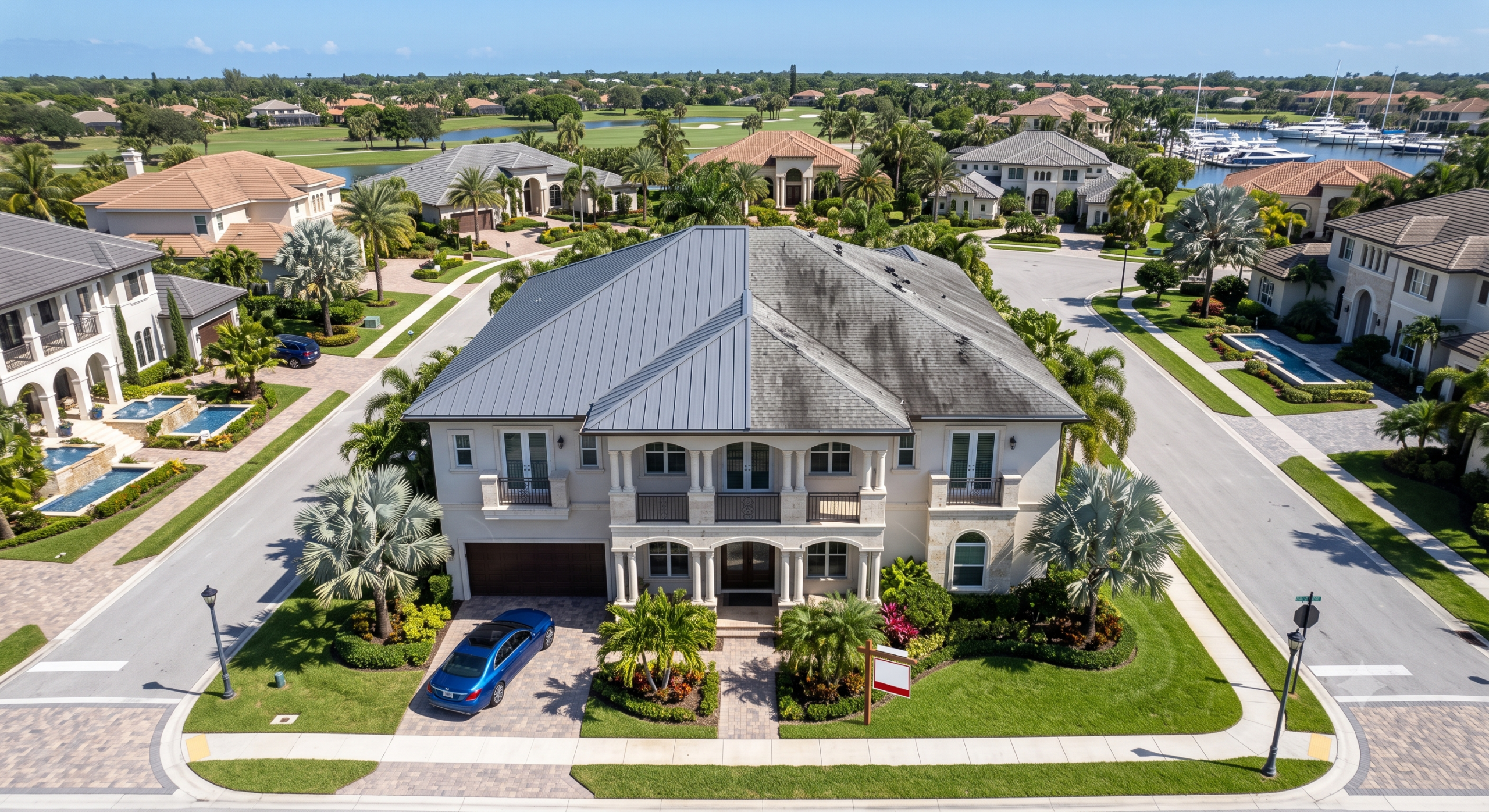
Should You Replace Your Roof Before Selling in Fort Lauderdale?
Whether to replace your roof before selling in Fort Lauderdale depends on the roof’s age, your price range, and how you plan to market the home. In Broward County, private insurers typically won’t write a new homeowners policy on a shingle roof older than 15 years — and without insurance, a financed buyer’s mortgage won’t fund. You have three options: replace the roof before listing (strongest position), offer a seller credit (works with cash buyers, not always with financed ones), or sell as-is to a cash buyer at a reduced price.
A 15-year-old roof in Fort Lauderdale isn’t just a maintenance issue. It’s a financing issue.
Here’s the chain that trips up sellers: buyer makes an offer, gets under contract, applies for homeowners insurance, and gets denied — because the roof is too old. No insurance means no mortgage approval. No mortgage means the deal dies. And by the time that happens, you’re weeks into the transaction, emotionally committed, and facing a $25,000–$35,000 decision on a compressed timeline. The smarter move is to understand your options before you list, not after.
How Roof Age Kills Deals in Broward County
Florida’s insurance market has specific rules about roof age, and in Broward County they’re enforced hard. Most private carriers won’t write a new homeowners policy on an asphalt shingle roof that’s 15 years or older. In some coastal zip codes, that threshold drops to 10 years. HB 815 says insurers can’t drop existing policyholders solely for roof age under 15 years — but that protection doesn’t apply to new buyers obtaining a new policy.
When a buyer’s insurance application gets denied, the lender won’t fund the loan. In Fort Lauderdale, roughly 35% of home sales are cash transactions — investors, second-home buyers, and international buyers who aren’t relying on a mortgage. Cash buyers can sidestep the insurance-financing chain entirely. But that still leaves 65% of your potential buyers — the financed ones — who can’t close without an insurable roof. An old roof effectively removes the majority of your buyer pool before negotiations even start.
The Three Options (and the Real Math)
Option 1: Replace the Roof Before Listing
This is the strongest position for most sellers in the $750K+ price range. A new roof removes the insurance and financing obstacle entirely. The buyer’s lender sees a clean 4-point inspection, insurance binds without a fight, and you don’t lose deals in the final stretch.
There’s another benefit: a new roof triggers a new wind mitigation inspection. In Broward County, a wind mitigation report showing features like a hip roof, hurricane clips, and sealed deck can reduce a buyer’s annual insurance premium by $800–$1,500 or more.
What it costs in Broward County in 2026:
- Asphalt shingle: $25,000–$35,000 for a 1,700–2,000 sq ft home
- Metal roof: higher, typically $35,000–$55,000+
- Tile: $40,000–$60,000+ depending on scope
Broward County sits in Florida’s High Velocity Hurricane Zone (HVHZ), which requires self-adhering underlayment, specific fastening patterns, and 170 mph wind-resistance compliance. That engineering requirement drives labor costs above what you’d pay in other states.
Best for: Sellers in the MLS market targeting financed buyers; sellers whose roof is 15+ years old; sellers who want maximum pricing power and the cleanest possible transaction.
Option 2: Offer a Seller Credit
Offering a credit instead of replacing the roof keeps the project off your plate. The problem: a credit doesn’t solve the insurance problem for financed buyers. If a buyer’s insurance application gets denied because of the roof’s age, the lender blocks the loan. A $30,000 seller credit is irrelevant if the buyer can’t close at all. Credits work best when the buyer is paying cash, or when the roof issue is borderline.
Best for: Cash-buyer transactions; borderline roof age where insurance denial isn’t certain.
Option 3: Sell As-Is to a Cash Buyer
Selling as-is to a cash buyer is a legitimate option — particularly if the roof is past the point where replacement makes financial sense. But “cash buyer” doesn’t mean “full-price buyer.” Cash investors in Broward County know exactly what an old roof costs and price it into their offer. You also still have to disclose the roof’s condition — Florida’s as-is contract doesn’t change your obligation to disclose known material defects (Johnson v. Davis).
Best for: Sellers in a time crunch; sellers where multiple major systems need work; sellers who prefer certainty over maximum price.
How to Think About the Decision
The right call depends on three factors: roof age and condition (under 12 years and in good shape, you probably don’t need to replace; 15+ years, assume it’s a deal issue), your target buyer (luxury/waterfront skews cash; mainstream skews financed), and your timeline and net proceeds. The answer is almost always in favor of replacing the roof if the home is priced above $600,000 and the buyer pool is predominantly financed buyers.
Fort Lauderdale homes are averaging over 100 days on market right now, and more than 27% of listings took price reductions in the past year. In this environment, condition matters. A home with a clean roof, a fresh wind mitigation report, and no financing surprises is a genuinely competitive listing.
Frequently Asked Questions
What age roof will cause problems when selling in Fort Lauderdale?
In Broward County, a shingle roof at or past 15 years old will likely cause problems with buyer financing. Most private insurers won’t write a new homeowners policy on a roof that age, and without an insurance binder, a mortgage lender won’t fund the loan.
Can I just give the buyer a credit instead of replacing the roof?
A seller credit works for cash buyers, but it doesn’t solve the problem for financed buyers. If the buyer’s insurance application gets denied due to roof age, the lender blocks the loan regardless of the credit amount.
How much does a roof replacement cost in Broward County in 2026?
For a typical 1,700–2,000 square foot home, a shingle roof replacement runs $25,000–$35,000. Broward is in Florida’s High Velocity Hurricane Zone, which requires specific materials and installation standards that drive costs above national averages.
Do I still have to disclose the roof’s condition if I’m selling as-is?
Yes. Under Johnson v. Davis, Florida sellers must disclose all known material defects that affect the property’s value, regardless of whether the contract is as-is.
About Scott Morreau
Scott Morreau, P.A. is a veteran REALTOR® and Broker Associate with Real Broker, LLC serving Fort Lauderdale, Wilton Manors, Oakland Park, and Pompano Beach, with more than 20 years of experience and over $53 million in Florida homes sold.
This article is general information only — not legal, tax, or financial advice.