
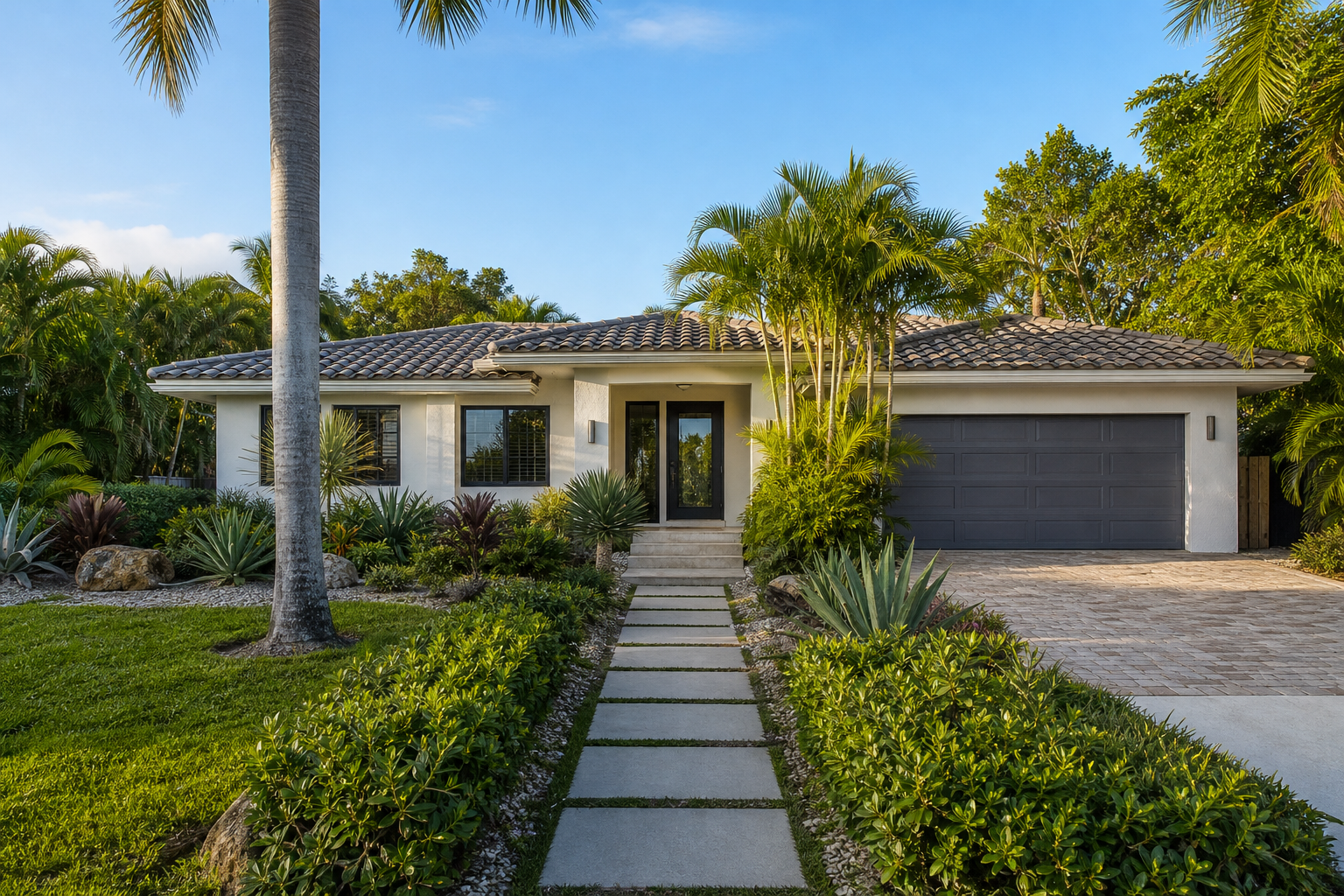
Fort Lauderdale waterfront homes can work as investments, but returns depend on the specific address, not the zip code. Flood zone, seawall condition, canal depth, bridge clearance, and rental rules each change value and usability. Verify them before you offer, and leave time for insurance quotes and inspections.
Fort Lauderdale Waterfront Homes as an Investment
Are Fort Lauderdale waterfront homes a good investment in 2026?
They can be, but only when the specific property checks out. Fort Lauderdale waterfront homes vary widely by water access, flood exposure, seawall and dock condition, and local rental rules, so two homes on the same street can perform very differently. Verify those items before you make an offer, then decide whether the numbers fit your goal.
Key Takeaways
- Recent local market data for Wilton Manors shows a $587,500 median sale price, a 56-day median time on market for sold homes, and 163 active listings.
- Area medians range from $410,000 in Oakland Park to $4,820,500 in Las Olas Isles, so there is no single Fort Lauderdale waterfront price to plan around.
- Flood risk is property-specific: the City of Fort Lauderdale says many residents live in or near a Special Flood Hazard Area, so check the FEMA designation for the exact address.
- The seawall, dock, boat lift, canal depth, and bridge clearance should be evaluated separately from the house itself.
- For a waterfront condo, the association’s finances, insurance, and rental restrictions matter almost as much as the unit.
What does the market look like for Fort Lauderdale waterfront homes?
It depends heavily on where you buy. There is no single “Fort Lauderdale market,” and prices can change dramatically within a few blocks, especially once water is involved.
Recent local market data (trailing 90 days, as of October 2026) for Wilton Manors shows a median sale price of $587,500. Homes that sold had a median of 56 days on market. There were 163 active listings, 36 new listings in the last 30 days, and 82 homes sold. Those are area-level figures. An individual home’s value depends on condition, street, build year, and timing.
Here’s how several of the areas I work in compare. These medians cover every sale in each area, not only waterfront sales, so use them for context and not as a waterfront price list.
| Area | Median Sale Price | Median Days on Market |
|---|---|---|
| Wilton Manors | $587,500 | 56 |
| Oakland Park | $410,000 | 45 |
| Lighthouse Point | $1,012,500 | 20 |
| Victoria Park | $800,000 | 43 |
| Las Olas Isles | $4,820,500 | 62 |
| Coral Ridge | $1,675,000 | 56 |
| Poinsettia Heights | $698,500 | 33 |
The days-on-market column counts homes that sold. It tells you how long those listings were on the market, not how quickly an offer came in.
What’s the difference between ocean-access, Intracoastal, and canal-front homes?
The difference is the boating route and the water itself, and that route drives both usability and resale appeal.
- Ocean-access homes have a boat route from the dock to the inlet. Bridge clearance, canal width, and the number of turns between you and open water decide which vessels can actually make the trip.
- Intracoastal homes sit on the wider waterway. They tend to offer broader views and easier maneuvering, but flood exposure, wake, and orientation all need a close look.
- Canal-front homes vary the most. Canal width, depth, and the seawall and dock setup can differ from one lot to the next.
- Oceanfront condos are a different investment entirely. You’re buying into a building, and the association’s health becomes part of your return.
If you live aboard a 25-foot center console, a fixed-bridge route may be fine. If you want a larger yacht, that same route can rule the property out. I walk clients through this early, because it changes which streets are even worth touring. If you’re weighing waterfront against inland, my breakdown of waterfront versus inland luxury homes adds more context. And for a closer look at one pocket of the market, see Wilton Manors as a prime waterfront investment. I live in this area, so that’s not a market I’m just visiting.
What should you check before buying a Fort Lauderdale waterfront home?
Check flood exposure, the marine infrastructure, title and permits, and the rental rules, in that order. Each one can change the price you should pay or whether you should buy at all.
How do you verify flood risk on a specific property?
Pull the FEMA flood map for the exact address. Don’t guess from the neighborhood name or from how close the home is to the Intracoastal. The City of Fort Lauderdale notes that many residents live in or near a Special Flood Hazard Area, where flooding can come from heavy rainfall, hurricanes, or other disasters. The city also points buyers to FEMA flood maps and local flood-risk tools to confirm a property’s status.
Other municipalities publish their own guidance. The Town of Lauderdale-by-the-Sea says properties east of the Coastal Construction Control Line, and those on or near the Intracoastal or connecting canals, fall in Special Flood Hazard areas. That’s one town’s statement, so don’t apply it to every waterfront address in Broward County.
During due diligence, I also want you to:
- Get an insurance quote before your contingency window closes.
- Ask whether the home has prior flood claims.
- Ask what mitigation features are in place.
Do you need flood insurance on a waterfront home?
If you’re financing, often yes. The city says flood insurance is required by law for buildings in mapped Special Flood Hazard Areas when the mortgage is federally backed. Coverage terms, and whether you should carry more, depend on the property, your lender, the insurer, and the policy. Cash buyers aren’t bound by a lender’s rule, but I’d still price coverage before offering. Confirm the specifics with your insurance agent and lender.
How do seawalls, docks, and canal depth affect value?
They affect both how usable the property is and how it will resell, so evaluate them separately from the house. For a canal-front property, verify each of these:
- Seawall condition
- Dock permits
- Boat-lift condition
- Canal depth and turning clearance
- Bridge clearance and tidal access
- Who is responsible for maintenance
I won’t hand you a dollar adjustment for any of these. They vary too much from lot to lot, which is exactly why online estimates miss them. An automated number doesn’t know the seawall is failing or the canal is too shallow for your boat. In waterfront markets, real data and a hands-on review protect your equity better than a website’s guess.
What about title, permits, and rental rules?
Review title and permit history so you know the docks, lifts, and any additions were built legally. Then check rental rules. Local restrictions vary by municipality and by association, so don’t assume one Greater Fort Lauderdale rule applies to your address. Read the specific address’s rules and the governing documents before you build a rental plan around the property.
Are waterfront condos a better investment than single-family homes?
Neither is better across the board. A waterfront condo is a building-level investment, while a single-family home is a land, structure, and marine-infrastructure investment. The right choice depends on your goals and how much hands-on responsibility you want.
With a condo, the building can matter almost as much as the unit. Before you offer, review:
- The association’s budget and reserves
- Its insurance coverage
- Recent engineering or structural reports
- Planned assessments
- Any litigation
- Rental restrictions and minimum ownership periods
- Any approval requirements after a sale
Inventory of oceanfront condos has been elevated, which can give you more room to negotiate. It doesn’t tell you which building is financially sound, though. Each association has to be reviewed on its own documents.
With a single-family waterfront home, you take on the seawall, dock, and lift directly. That can mean more control and more upside, but also more maintenance responsibility. If you later decide to sell, presentation matters a great deal, which I cover in marketing luxury waterfront homes in Fort Lauderdale.
What’s the process for buying with confidence?
Start with your intended use, then verify the rules, risks, and physical condition before you commit. Here’s the order I’d follow:
- Define the use. Primary residence, long-term rental, seasonal rental, or personal-use investment each point to different properties.
- Verify rental rules. Check the municipality and, for condos, the association documents.
- Get insurance indications. Do this early, because coverage can change what the property is worth to you.
- Inspect the structure and the marine components. The house, seawall, dock, and lift each deserve attention.
- Review title and permits. Make sure what’s on the water is documented.
- Confirm financing. Talk to your lender about how the property type and flood zone affect your loan.
- Write protections into the contract. Make the inspection, insurance, financing, and document-review windows explicit. Your title company handles the closing and the funds held in trust.
If you’re coming out of a 1031 exchange, tell me at the start, because the timeline shapes every other decision. Confirm the tax details with your tax advisor.
Every property’s answers are different, and the only way to know yours is to run them against the actual address. That’s the conversation I have with my clients before we write an offer.
If you’d like to see how past clients feel about working with me, you can read my reviews on Google and Zillow.
FAQ
Is buying a Fort Lauderdale waterfront home a good investment in 2026?
It can be, but it depends on the property and your goal. Flood exposure, marine infrastructure, and rental rules all affect what you’ll earn and what you can resell for. I’d run the numbers on the exact address before relying on any area average.
Do I need flood insurance for a waterfront home in Fort Lauderdale?
If your mortgage is federally backed and the building is in a mapped Special Flood Hazard Area, the City of Fort Lauderdale says it’s required by law. Even if you’re paying cash, get a quote during due diligence so you know the real carrying cost.
What should I inspect before buying a canal-front property?
Inspect the house, and also the seawall, dock, and boat lift. Verify dock permits, canal depth, turning clearance, bridge clearance, tidal access, and who maintains what. Use qualified inspectors for the marine components.
Are Fort Lauderdale waterfront condos a better investment than single-family homes?
Not automatically. A condo ties your return to the building’s finances and rules, while a single-family home puts the seawall and dock on you. Compare them against your intended use, and review the association’s documents closely before choosing a condo.
What should investors check in a waterfront condo association?
Start with the budget, reserves, insurance, and any recent engineering or structural reports. Then look at planned assessments, litigation, rental restrictions, minimum ownership periods, and any approval needed after a sale. Those documents tell you more than the unit’s finishes do.
Ready to look at the right property?
Investing in Fort Lauderdale waterfront homes works best when you verify the address before you fall for the view. I handle each transaction personally, and I’ll help you compare water access, flood exposure, and building or marine condition side by side. Schedule a conversation with me and we’ll map out your plan.
Equal Housing Opportunity. Scott Morreau, Broker Associate, Real Broker, LLC (licensed since 2001). Regulated by the Florida Real Estate Commission. This article is general information, not legal, tax, or financial advice. Confirm your own numbers with your title company, tax advisor, or lender.