
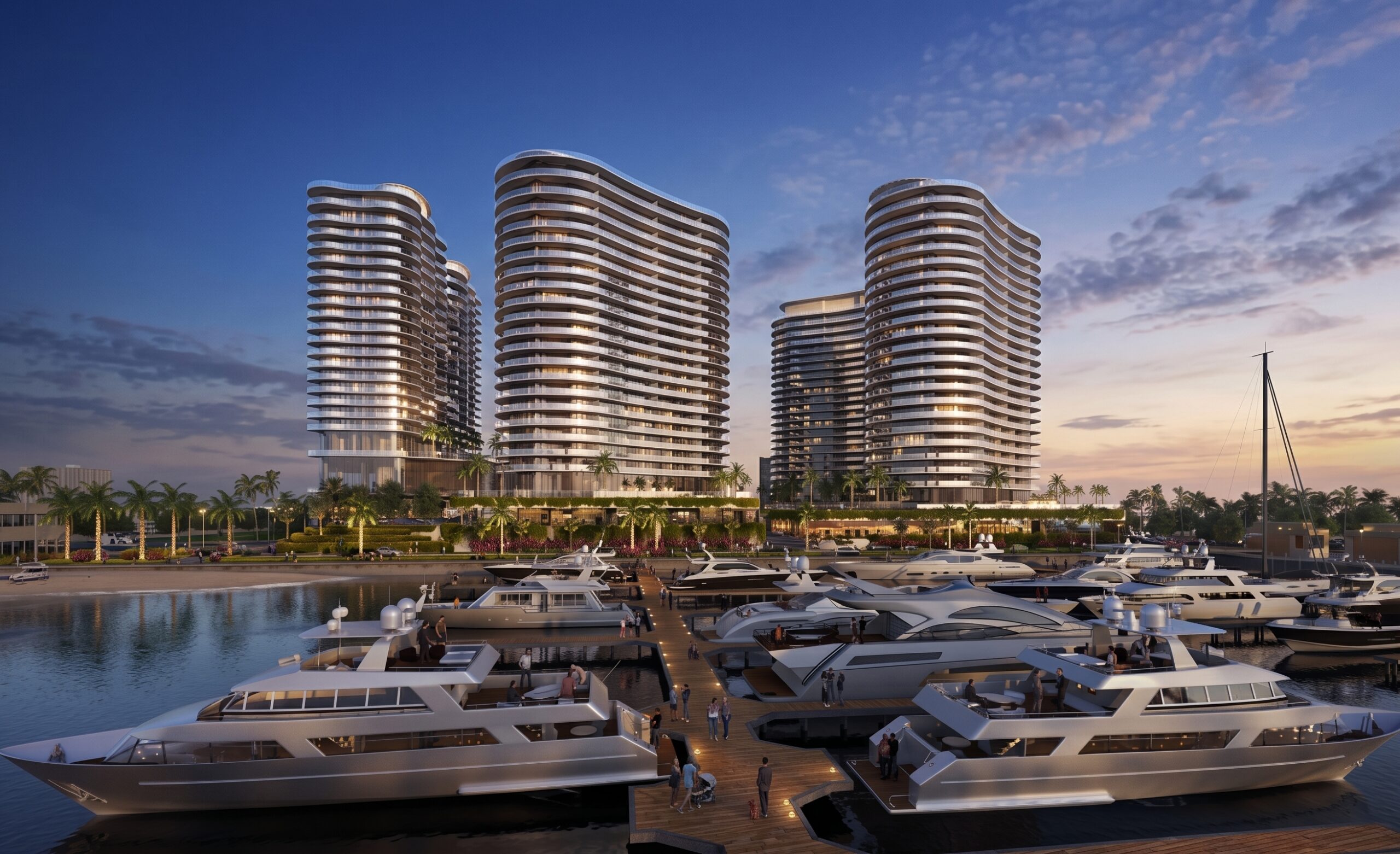
Fort Lauderdale’s expanding marina scene, anchored by multi-billion-dollar redevelopments at Bahia Mar and Pier Sixty-Six, is strengthening demand for nearby waterfront homes. Marina-proximate properties in areas like Las Olas Isles and Coral Ridge command significant premiums, and sustained capital investment signals long-term value for buyers and investors.
How is Fort Lauderdale’s marina expansion affecting waterfront real estate values?
Fort Lauderdale’s marina expansion is directly supporting waterfront property demand and values. Multi-billion-dollar redevelopments at Bahia Mar and Pier Sixty-Six, combined with the city’s existing status as the Yachting Capital of the World, are drawing sustained capital investment into the waterfront corridor. Marina-adjacent neighborhoods like Las Olas Isles and Coral Ridge already command substantial price premiums over the broader market, and the pipeline of approved projects signals that gap is unlikely to close anytime soon.
What’s Actually Being Built (and Why It Matters to Property Values)
Fort Lauderdale has always had the water. What’s changing in 2026 is the scale and sophistication of what’s being built around it.
The Bahia Mar redevelopment is the headline. Plans call for a roughly $2 billion mixed-use project that includes twin St. Regis-branded residential towers, a flagship hotel, a private beach club, about 88,000 square feet of waterfront dining and retail, and superyacht slips capable of accommodating vessels up to 350 feet. Local coverage has described it as a “mini Monaco” on Fort Lauderdale’s waterfront, and that framing isn’t much of an exaggeration.
Pier Sixty-Six is moving through its own transformation. Phase II was announced in May 2026 and includes four 23-story towers with 339 residences, office space, retail, restaurants, structured parking, expanded marina facilities, and a carved-out water basin to increase marina access. The full reopening of Pier Sixty-Six was highlighted during the 2025 Fort Lauderdale International Boat Show as a significant enhancement to the overall marina experience.
Then there’s the Las Olas Marina redevelopment. The City of Fort Lauderdale projects it will generate approximately $221 million in annual economic impact once fully operational, driven primarily by superyacht dockage, tourism spending, and marine services.
What does all of this mean for the homeowner or investor considering a waterfront purchase? These aren’t speculative announcements. These are approved, funded, multi-phase projects backed by institutional capital. When that kind of investment concentrates in a single waterfront corridor, the residential real estate around it tends to respond accordingly.
I’ve watched this market for more than 20 years, and the current pipeline of marina investment is unlike anything I’ve seen in a single cycle. Buyers who understand what’s being built, and where, are positioning ahead of a physical transformation that will reshape the waterfront experience by 2028 to 2030.
The Economic Engine Behind the Marina Scene
The marina expansion doesn’t exist in isolation. Fort Lauderdale’s marine industry already accounts for an estimated $9 billion in economic impact in Broward County and approximately $12 billion across the broader South Florida region (figures from the Marine Industries Association of South Florida, dating to the late 2010s and early 2020s). The industry supports more than 111,000 jobs in Broward County alone, with roughly $4 billion in wages and earnings.
Port Everglades, located within Greater Fort Lauderdale, layers another $28 billion-plus in economic impact on top of that, handling millions of cruise passengers annually and supporting thousands of additional jobs in the region.
And every October, the Fort Lauderdale International Boat Show brings more than 100,000 visitors from over 50 countries to see more than 1,500 boats across 1,000-plus exhibitors. The 2025 show generated a $1.78 billion economic impact to the state of Florida over five days, with over $800 million in marine product sales. That level of annual international exposure keeps Fort Lauderdale’s waterfront in front of a global buyer pool in a way that no other Florida market can replicate.
What the Numbers Look Like Across Marina-Adjacent Neighborhoods
The price gap between waterfront and non-waterfront properties in Fort Lauderdale is real and measurable. According to recent market data, waterfront single-family sales in Fort Lauderdale averaged approximately $3.41 million in Q2 2025, with a median of roughly $1.7 million across 82 closings, compared to a broader Fort Lauderdale single-family median of $750,000 for December 2025 (per a May 2026 analysis of Broward County sales data). That’s a meaningful premium that reflects not just the water access itself, but the lifestyle infrastructure around it.
Here’s how the marina-proximate neighborhoods I work in compare right now, based on recent Zillow market data (trailing approximately 90 days, as of August 2026). These are area-level medians, and individual home values vary by condition, street, build year, and timing.
| Area | Median Sale Price | Median Days on Market |
|---|---|---|
| Wilton Manors | $560,000 | 49 |
| Lighthouse Point | $917,000 | 50 |
| Victoria Park | $900,000 | 40 |
| Las Olas Isles | $5,132,500 | 58 |
| Coral Ridge | $1,550,000 | 40 |
Las Olas Isles sits at the top of that table for good reason. It’s a deepwater canal community with direct ocean access, no fixed bridges on many routes, and it sits within walking distance of the Las Olas Boulevard corridor. If you want to understand the ceiling of what marina proximity and water access can do to residential values in this market, Las Olas Isles is the case study. I’ve written more about how it compares to other luxury waterfront options in my post on Las Olas Isles vs. Harbor Beach for investors.
Coral Ridge is the other neighborhood worth watching closely right now. It has strong water access, a mix of canal and point lots, and it sits directly adjacent to the Coral Ridge Country Club corridor. At a $1.55 million median, it’s still accessible relative to Las Olas Isles while offering genuine deepwater access for most of the waterfront streets.
For a broader look at how waterfront and inland luxury properties compare as investments in 2026, I’d point you to my analysis of Fort Lauderdale waterfront vs. inland luxury homes.
What Marina-Focused Buyers Need to Ask
If you’re buying a waterfront property specifically because you want to use it as a home base for a vessel, the marina expansion story matters, but it’s not the only story. Here’s what I walk every boating buyer through before we make an offer:
- Distance by water to the inlet. Shorter is better, but the route matters as much as the distance. Some canal properties are technically ocean-access but require navigating through low-clearance areas.
- Fixed bridge clearances along your route. This is the make-or-break factor for larger vessels. A property that can’t accommodate your boat’s air draft is the wrong property, regardless of price.
- Canal depth at the dock. Shoaling is real in South Florida canals. I always recommend a depth survey before closing on a property where draft matters.
- Seawall condition and age. Replacing a seawall is a significant expense. On waterfront properties, I look at this as carefully as a roof inspection on a dry-land home.
- Proximity to quality service yards. Fort Lauderdale’s density of world-class marine service facilities is genuinely unmatched. But proximity to a trusted yard matters for owners who haul out regularly.
Your specific answers to these questions will affect both the property’s value to you and its resale appeal to the next buyer. That’s where local knowledge pays for itself.
What Sellers and Investors Need to Know About Disclosure
Florida’s disclosure requirements have real teeth on waterfront transactions, and they’ve gotten more specific since 2024.
As of October 1, 2024, Section 689.302, Florida Statutes requires sellers of residential real property to provide a statutory Seller Flood Disclosure at or before contract execution. This is a distinct, separate document from the general Seller’s Property Disclosure form. It must include whether the seller has ever filed a flood insurance claim or received federal disaster assistance for the property, and it must contain a specific bolded statement that standard homeowner’s insurance does not cover flood damage. Florida Realtors® has developed a standardized form to comply with this requirement.
So if you’re selling a waterfront or canal-adjacent home in Broward County, your buyer will receive two distinct disclosures: the brokerage-driven Seller’s Property Disclosure covering systems, structure, seawall condition, and prior water intrusion, and the legally mandated Seller Flood Disclosure. Both matter for investor risk assessment, and both need to be accurate and complete.
On the closing side, Florida’s Documentary Stamp Tax on deeds in Broward County is set by statute at $0.70 per $100 of consideration under Chapter 201, Florida Statutes. It’s a fixed statutory rate with no cap, collected at or before deed recording, and typically handled by the title company or closing attorney. Who pays it is commonly negotiated between buyer and seller as part of the contract, so confirm your own allocation with your attorney or closing officer.
Frequently Asked Questions
How are the Bahia Mar and Las Olas Marina redevelopments affecting nearby waterfront home prices?
The direct price impact of projects still under construction or in early phases is difficult to isolate from broader market trends, but the signal is clear: sustained institutional capital investment in the waterfront corridor supports long-term demand for marina-adjacent housing. Waterfront single-family properties in Fort Lauderdale already averaged approximately $3.41 million in Q2 2025 closings, compared to a broader city median of $750,000 for single-family sales, according to a May 2026 analysis of Broward County data. As these projects deliver, the gap between marina-proximate and standard properties is likely to widen further.
Is buying a Fort Lauderdale home with a private dock worth the premium over a non-waterfront property?
For buyers who will actively use the water, the premium is often justified by both lifestyle value and resale demand. The waterfront premium in Fort Lauderdale is structural, not cyclical. That said, the right dock on the wrong canal (shallow depth, low bridge clearance, poor seawall condition) can undercut the value quickly. The premium is worth it when the water access actually works for your vessel and your intended use.
Are Pier Sixty-Six and Bahia Mar good long-term indicators for waterfront investment in Fort Lauderdale?
Yes, and here’s why: these are multi-phase, institutionally funded projects with city approvals already in place. The pipeline of approved waterfront projects signals that the physical environment buyers will experience in 2028 to 2030 will be materially different from what existed in 2020 to 2022. Investors who buy near these corridors now are essentially buying ahead of that transformation. The risk is project timing and execution, not demand fundamentals.
Does Florida’s new seller flood disclosure law change what I need to provide when selling a waterfront home in Broward County?
Yes. Under F.S. 689.302, which took effect October 1, 2024, you must provide a statutory Seller Flood Disclosure at or before contract execution. This is separate from the general Seller’s Property Disclosure form and must include your flood insurance claim history, any federal disaster assistance received, and a specific statement that homeowner’s insurance typically does not cover flood damage. On a waterfront or canal property, both disclosures carry significant weight and need to be completed accurately.
What should I ask about when buying in a Fort Lauderdale canal neighborhood with ocean access?
The four questions I always raise with boating buyers are: canal depth at the dock (get a survey), fixed bridge clearances along the route to the inlet, seawall age and condition, and the distance by water to the nearest ocean inlet. These factors directly affect whether the property actually works for your vessel and how it will hold value with the next buyer. Every canal is different, and the answers matter more than the listing description.
Fort Lauderdale’s marina expansion is one of the most compelling long-term stories in South Florida real estate right now. The combination of institutional capital, a globally recognized marine economy, and a concentrated pipeline of mixed-use waterfront projects creates a market where proximity to water isn’t just a lifestyle preference, it’s a measurable investment thesis.
If you’re thinking about buying, selling, or investing near the waterfront, I’d be glad to walk you through what the data actually looks like for the specific streets and neighborhoods you’re considering. Schedule a conversation here and let’s look at the numbers together.
Equal Housing Opportunity. Scott Morreau, P.A., Broker Associate, Real Broker, LLC (Licensed since 2001), regulated by the Florida Real Estate Commission. This article is general information only and does not constitute legal, tax, or financial advice. Confirm your specific numbers and obligations with your attorney, tax advisor, lender, or closing officer. Real Broker, LLC main office: 8291 Championsgate Blvd., Championsgate, FL 33896. Office at 2312 Wilton Drive is not a registered branch office and is not open to the public; meetings by appointment only.