
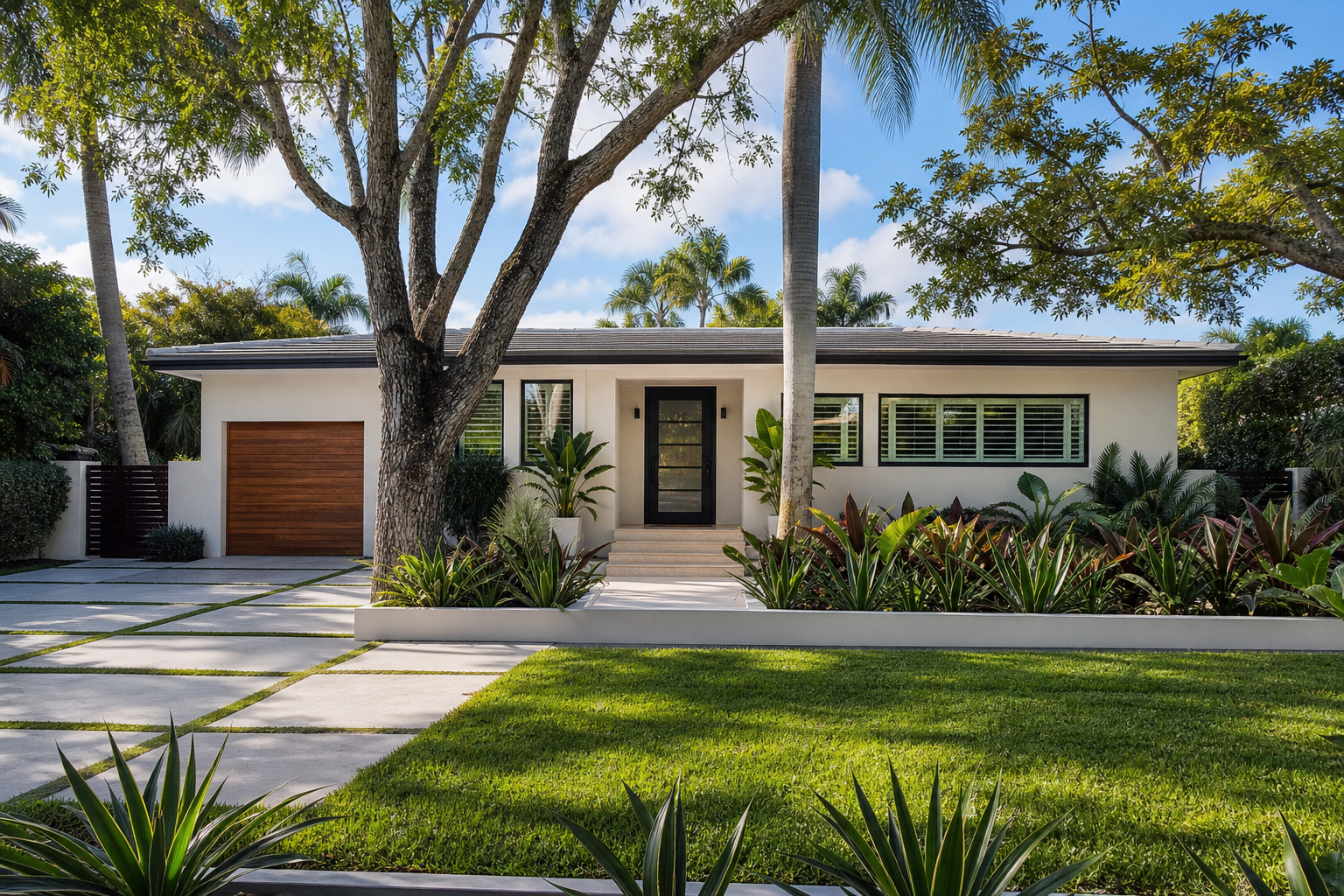
Buying a home in Greater Fort Lauderdale requires more than a down payment. Most financed buyers need to budget for closing costs, prepaids, and an earnest money deposit on top of their down payment, the total cash-to-close is typically several thousand dollars more than the headline purchase price alone.
How much cash do you actually need to buy a house in Greater Fort Lauderdale?
The total cash you need to close on a financed home purchase in Greater Fort Lauderdale includes your down payment, buyer-side closing costs, prepaid items (homeowners insurance, property taxes, and mortgage interest), and an earnest money deposit. Depending on your loan type, purchase price, and negotiated terms, that number can run meaningfully higher than your down payment alone, and knowing the full picture before you start touring homes is the difference between a smooth closing and a stressful scramble.
The Four Buckets of Cash Every Fort Lauderdale Buyer Needs
When I sit down with a buyer for the first time, I walk them through four distinct categories of cash. Most people come in thinking only about the down payment. By the time we’re done, they have a realistic target to bring to their lender, and no surprises at the closing table.
1. Down Payment
This is the biggest line item for most buyers, and it varies widely by loan type. A conventional loan can go as low as 3% down for qualifying first-time buyers, though 5%–20% is more common. FHA loans require 3.5% down with a qualifying credit score. VA and USDA loans offer zero-down options for eligible buyers. Jumbo loans, common in neighborhoods like Las Olas Isles, Coral Ridge, and Seven Isles, typically require 10%–20% or more.
Recent Zillow market data puts the median sale price in the Wilton Manors area at $565,000, with 92 homes sold in roughly the past 90 days and 161 active listings currently on the market. That gives you a real anchor for what “typical” looks like in this corridor, though your number depends entirely on the specific home, street, and timing. On a $565,000 purchase, a 10% down payment is $56,500. A 20% down payment is $113,000. Those are the numbers you’re working with before a single closing cost is added.
2. Buyer Closing Costs
Closing costs are the fees paid to third parties to complete the transaction. In Florida, buyer-side closing costs typically include lender origination fees, title insurance (the buyer’s lender policy and, optionally, an owner’s policy), title search and examination, recording fees, appraisal, survey, and flood determination. According to the CFPB’s closing disclosure guidance, buyers should expect to receive a Loan Estimate from their lender within three business days of applying, that document itemizes every fee so there are no surprises.
In Broward County, recording fees are set by the Broward County Records, Taxes and Treasury Division. Florida’s documentary stamp tax on mortgages (not the deed) is assessed at a rate set by the Florida Department of Revenue, your closing agent will calculate this based on your loan amount. The documentary stamp tax on the deed and the intangible tax on the mortgage are line items your title company will walk you through at closing.
One thing I always make sure my buyers understand: who pays which closing cost is often negotiable. In a softer market, sellers sometimes agree to contribute toward buyer closing costs as a concession. That’s a conversation to have with your agent before you make an offer, not after.
3. Prepaids and Escrow Reserves
This is the bucket that surprises buyers the most. Prepaids are not fees, they’re money you’re paying in advance for costs you’d owe anyway. They include:
- Homeowners insurance: Most lenders require the first year’s premium paid at closing. In South Florida, insurance costs have been a significant factor for buyers, the Florida Office of Insurance Regulation tracks market conditions, and rates vary considerably by property age, construction type, and location.
- Property taxes (escrow reserves): Your lender will collect a cushion of prepaid property taxes to seed your escrow account. Broward County property tax rates and assessed values are managed by the Broward County Property Appraiser.
- Prepaid mortgage interest: You pay interest from your closing date through the end of that month. The later in the month you close, the less you pay here.
- Flood insurance (if required): Properties in a Special Flood Hazard Area require flood insurance, typically through the NFIP or a private carrier. In waterfront neighborhoods across Fort Lauderdale, this is a real line item, your lender will flag it if it applies to your property.
Prepaids and escrow reserves can add a substantial amount to your cash-to-close. Your Loan Estimate will break this out precisely once you’ve applied with a lender.
4. Earnest Money Deposit
The earnest money deposit (EMD) goes into escrow when your offer is accepted. It’s not an additional cost, it applies toward your down payment or closing costs at closing, but it is cash you need to have liquid and ready to wire within days of going under contract. In Greater Fort Lauderdale, EMD amounts vary by price point and seller expectations. Your agent will advise you on what’s competitive for the specific home and market conditions at the time you’re making an offer.
According to NAR research, earnest money is a key signal of buyer seriousness in competitive markets. A thin deposit on a well-priced property in Wilton Manors or Oakland Park can cost you the deal.
What the Numbers Look Like at Different Price Points
I can’t give you a personalized net sheet here, that’s what your lender’s Loan Estimate is for, and every transaction is different. What I can do is show you the categories side by side so you can see how the buckets stack up as purchase prices change.
| Cost Category | What It Covers | When You Pay It |
|---|---|---|
| Down Payment | Your equity stake in the home; varies by loan type | At closing |
| Lender Fees | Origination, underwriting, appraisal | At closing (some at application) |
| Title and Settlement | Title search, title insurance, closing/escrow fee, recording | At closing |
| Government Fees | Doc stamps on mortgage, intangible tax, deed recording | At closing |
| Prepaids | First year homeowners insurance, property tax reserves, prepaid interest | At closing |
| Flood Insurance (if applicable) | First year premium for NFIP or private policy | At closing or before |
| Earnest Money Deposit | Good-faith deposit; credited toward your costs at closing | Within days of accepted offer |
The exact dollar amounts across every row depend on your purchase price, loan type, lender, closing date, and what you’ve negotiated with the seller. Your lender’s Loan Estimate, which the CFPB requires lenders to deliver within three business days of your application, is the authoritative document. That’s the number to plan around, not a blog estimate.
If you’re also thinking about what it looks like to sell your current home and buy at the same time, I’ve written about the strategies for selling and buying simultaneously in Fort Lauderdale, it’s a different cash-flow equation entirely.
How to Prepare Before You Start Touring Homes
The single most important thing you can do before we look at a single property is get pre-approved, not pre-qualified, pre-approved. A pre-approval means a lender has verified your income, assets, and credit. It also gives you a real Loan Estimate to work from, so you know your actual cash-to-close target, not a ballpark.
Here’s the sequence I walk every buyer through:
- Choose a lender and apply. The CFPB’s rate exploration tool is a good starting point for understanding how loan type, credit score, and down payment affect your rate.
- Review your Loan Estimate carefully. This document itemizes every closing cost and prepaid. If something looks off, ask your lender to explain it line by line.
- Confirm your liquid assets. Your down payment and closing costs need to be in a verifiable account, lenders will source and season your funds. A last-minute large deposit can create underwriting headaches.
- Account for post-closing reserves. Many lenders want to see that you’ll have cash left after closing. Don’t drain every account to get to the table.
- Talk to your agent about seller concessions. In certain market conditions, negotiating a seller contribution toward closing costs is realistic. That changes your out-of-pocket number at closing.
Florida Realtors and the Florida Realtors market research team track statewide and regional market trends that can inform your timing and negotiating position. The Freddie Mac research on down payment myths is also worth reading if you’re not sure which loan type fits your situation, many buyers don’t realize how many low-down-payment options exist.
Your specific number depends on your home’s condition, location, loan type, and the terms you negotiate. That’s exactly the conversation to have before you fall in love with a house, not after.
Frequently Asked Questions
What is a typical earnest money deposit in Fort Lauderdale?
There’s no fixed rule, but earnest money deposits in Greater Fort Lauderdale generally reflect the competitiveness of the price point and how motivated the seller is. Your agent will advise you on what’s appropriate for the specific property and current market conditions. The deposit is held in escrow and credited toward your down payment or closing costs at closing, it’s not an extra cost, but you do need the funds liquid and ready to wire quickly after an accepted offer.
Can the seller pay my closing costs in Florida?
Yes. Seller concessions toward buyer closing costs are negotiable in Florida and are a common part of offer negotiations, especially when a property has been sitting on the market. The amount a seller can contribute is also subject to lender limits based on your loan type and down payment percentage, your lender can tell you the maximum allowed for your specific loan. This is one of the reasons it pays to have your pre-approval in hand before you make an offer: you’ll know exactly how to structure the request.
Does Florida have a state income tax that affects my home purchase?
Florida has no state income tax, which is one reason relocation buyers frequently target South Florida. That said, Florida does have documentary stamp taxes and intangible taxes that apply to real estate transactions and mortgages, these are assessed by the Florida Department of Revenue and will appear on your closing disclosure. They are separate from income tax and are part of your buyer closing costs.
How does flood insurance affect my cash to close in Fort Lauderdale?
If the property you’re buying is in a FEMA-designated Special Flood Hazard Area, your lender will require flood insurance as a condition of the loan. The first year’s premium is typically paid at or before closing, which adds to your cash-to-close figure. Flood insurance in South Florida varies significantly by property elevation, construction type, and flood zone, the FEMA National Flood Insurance Program and private carriers both offer policies. Your lender and insurance agent are the right people to quote this for your specific property.
What’s the difference between a Loan Estimate and a Closing Disclosure?
The Loan Estimate is the document your lender provides within three business days of your loan application, it’s your early snapshot of projected costs. The Closing Disclosure is the final version, delivered at least three business days before closing, that reflects the actual, locked numbers. Compare the two carefully: if a fee increased significantly without explanation, you have the right to ask why before you sign.
The bottom line: buying a home in Greater Fort Lauderdale requires more cash than the purchase price alone suggests. Understanding all four buckets, down payment, closing costs, prepaids, and earnest money, before you start shopping puts you in a position to move fast and negotiate from strength when the right property comes up.
If you want to walk through what your specific cash-to-close picture might look like for a home in Wilton Manors, Oakland Park, Pompano Beach, or anywhere across Fort Lauderdale, schedule a conversation with me and we’ll map it out together, before you fall in love with a house that doesn’t fit your budget.
Equal Housing Opportunity. Scott Morreau, P.A. is a Broker Associate with Real Broker, LLC (Licensed since 2001), regulated by the Florida Real Estate Commission. This article is general information only and is not legal, tax, or financial advice. Confirm your specific costs with your attorney, tax advisor, lender, or closing officer. Real Broker, LLC main office: 8291 Championsgate Blvd., Championsgate, FL 33896. Office at 2312 Wilton Drive is not a registered branch office and is not open to the public; meetings by appointment only.